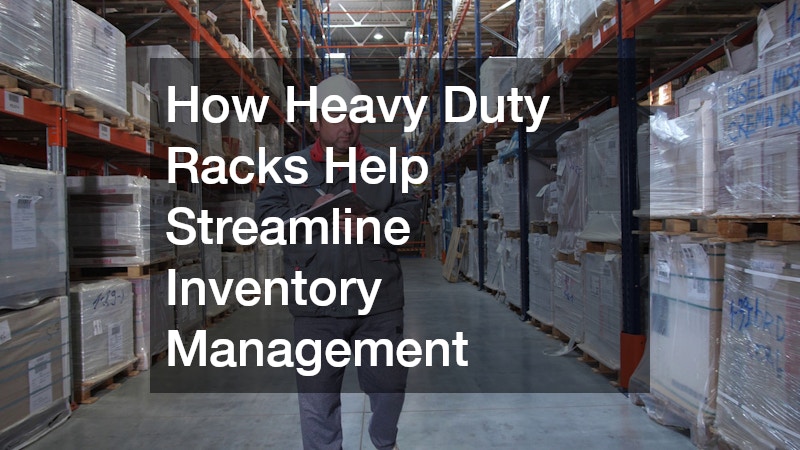

Efficient inventory management is one of the most important factors in keeping warehouses, distribution centers, and industrial facilities running smoothly. When storage systems are disorganized or poorly structured, it can lead to misplaced goods, delayed orders, and increased operational costs. Businesses today rely heavily on structured storage solutions to maintain accuracy and speed in their daily operations. One of the most effective solutions used in modern facilities is heavy duty racks, which provide the strength and organization needed to handle large volumes of inventory. These systems are designed to support high-capacity loads while maintaining easy accessibility, making them a practical choice for businesses that deal with constant inventory movement.
By improving how products are stored and retrieved, they play a key role in reducing inefficiencies and supporting smoother workflows across the entire supply chain.
The Role in Modern Warehouses
Modern warehouses operate in fast-paced environments where efficiency and accuracy are essential. Every square foot of storage space must be optimized to ensure that inventory is easily accessible and properly categorized. Without a structured system, warehouses can quickly become cluttered, leading to confusion and slower order fulfillment. Storage systems must also be adaptable, as inventory types and volumes often change based on demand fluctuations. This requires a solution that can support flexibility while maintaining structural integrity. In addition to space optimization, proper storage design also contributes to workplace safety by reducing clutter and minimizing the risk of accidents. Clear organization allows workers to navigate the facility more efficiently, improving productivity and reducing downtime during busy operational periods.
Improving Storage Efficiency
One of the primary benefits of modern storage systems is their ability to maximize vertical and horizontal space. Instead of relying on floor stacking or temporary storage methods, businesses can use structured shelving systems to create designated storage zones. This not only increases available capacity but also improves accessibility for workers retrieving or storing goods. In many facilities, heavy duty racks are used to support this level of organization because they allow for consistent spacing and structured placement of inventory items. By creating clearly defined storage areas, businesses can reduce search time and improve order accuracy. This level of efficiency is especially important in high-volume operations where even small delays can impact overall productivity and customer satisfaction.
Supporting Inventory Tracking
Accurate inventory tracking is essential for maintaining control over stock levels and preventing issues such as overstocking or shortages. When inventory is stored in a disorganized manner, it becomes difficult to maintain accurate records, which can lead to costly errors. Structured storage systems allow businesses to assign specific locations to products, making it easier to track movement and monitor stock levels in real time. This organization also supports the use of barcode systems and digital inventory management tools, which rely on consistent placement to function effectively. When items are stored in predictable locations, employees can quickly scan, update, and retrieve data without confusion. Over time, this level of organization contributes to better forecasting, improved order accuracy, and more efficient supply chain management overall.
Enhancing Safety and Workflow
Workplace safety is a major concern in any industrial or warehouse environment. Poor storage practices can lead to unstable stacking, blocked pathways, and increased risk of injury. A well-organized storage system helps reduce these risks by ensuring that items are stored securely and in designated areas. Clear walkways and structured shelving also make it easier for employees to move through the facility without obstruction. This improves workflow efficiency by reducing unnecessary movement and minimizing time spent searching for items. In addition, proper weight distribution and stable shelving reduce the likelihood of accidents caused by collapsing or improperly stored inventory. A safer work environment ultimately leads to higher productivity and fewer disruptions caused by workplace incidents.
Scalability for Growing Operations
As businesses expand, their storage needs naturally increase, making scalability an essential factor in warehouse design. Storage systems must be able to adapt to higher inventory volumes without requiring complete structural overhauls. Modular configurations allow facilities to expand gradually, adding more storage capacity as needed while maintaining organization and accessibility. This flexibility is especially important for businesses experiencing seasonal demand changes or rapid growth. Scalable systems also help reduce long-term costs by eliminating the need for frequent replacements or major redesigns. Instead, facilities can adjust layouts and expand vertically or horizontally based on available space and operational requirements. This adaptability ensures that storage infrastructure continues to support business growth without compromising efficiency or safety.
Streamlining inventory management requires a combination of organization, efficiency, and safety. Businesses that invest in structured storage solutions are better equipped to handle large volumes of inventory while maintaining accuracy and operational speed. Proper storage systems reduce clutter, improve accessibility, and support more effective tracking methods, all of which contribute to smoother daily operations. The use of heavy duty racks plays an important role in achieving these outcomes by providing a stable and reliable foundation for storing high-capacity inventory in demanding environments. When implemented correctly, these systems help businesses optimize space, improve workflow, and maintain better control over their inventory. Over time, this leads to increased productivity, reduced operational errors, and a more efficient overall supply chain.