The physical state of your business facility does much more than just keep the rain off your employees’ heads. It serves as the silent ambassador of your brand, a crucial driver of employee productivity, and a major factor in your long-term operational overhead. Every day that clients walk through your doors, they are forming subconscious opinions based on the environment around them. Similarly, your workforce’s morale, health, and output are intrinsically tied to the safety, comfort, and functionality of their workspace.
Unfortunately, many business owners and facility managers fall into the trap of reactive maintenance. They wait for a pipe to burst, a cooling unit to fail, or a parking lot pothole to cause damage before they open their checkbooks. This break-fix mentality might seem like it saves money in the short term, but it almost always leads to compounding costs, emergency service fees, and prolonged operational downtime. Taking a holistic, proactive approach to facility upgrades is the only way to safeguard your investment and future-proof your business operations.
This comprehensive guide introduces the “Top-to-Bottom” facility upgrade strategy. By systematically evaluating and modernizing your property—starting from the exterior envelope and roof down to the interior finishes and ergonomics—you can drastically improve property value, enhance safety, and slash your long-term utility and maintenance costs. Whether you manage a retail storefront, a sprawling warehouse, or a multi-story corporate office, the actionable strategies detailed below will help you transform your aging building into a high-performance asset.
Section 1: Protect and Power Your Building from Above

Assess and Fortify the Structural Integrity of Your Roof
The roof of your commercial building takes the brunt of nature’s harsh elements. From blistering UV radiation in the summer to heavy snow loads and freezing temperatures in the winter, the materials protecting your facility are under constant stress. When a roof fails, the consequences cascade rapidly through the rest of the building, destroying inventory, damaging internal infrastructure, and halting daily operations.
Conducting thorough, bi-annual roof inspections is non-negotiable for responsible facility management. You should inspect your roof once in the late spring to assess winter damage and once in the fall to prepare for the harsher months ahead. While it may be tempting to send an in-house maintenance worker up a ladder to patch visible issues, this is a highly specialized area of building management. Relying on experienced commercial roofers ensures that hidden vulnerabilities—such as degrading subsurface insulation or microscopic membrane tears—are accurately identified and remedied before they result in catastrophic structural failure.
Here is a detailed checklist of what a comprehensive structural assessment should entail:
-
Inspect the Membrane for Blisters and Cracking: Commercial flat roofs, such as those made of TPO (Thermoplastic Polyolefin) or EPDM (Ethylene Propylene Diene Terpolymer), can develop blisters when moisture gets trapped beneath the surface and expands under the heat of the sun. These must be professionally excised and patched to prevent widespread peeling.
-
Evaluate Drainage Systems and Pooling Water: Water should never stand on a commercial roof for more than 48 hours after a rainstorm. Assess all scuppers, internal drains, and gutters to ensure they are free of debris like leaves, branches, and dirt buildup. Ponding water accelerates the degradation of roofing materials and adds immense, dangerous weight to the building’s structural supports.
-
Check All Flashing and Penetrations: The most common sources of leaks are not in the open expanse of the roof, but at the seams. Examine the metal flashing around HVAC units, skylights, vents, and parapet walls. If the sealant is cracking or the metal is rusting and pulling away, it needs immediate replacement.
-
Assess Roof Traffic Damage: If your building requires frequent foot traffic on the roof for HVAC maintenance or window washing, ensure that designated walkway pads are installed. Routine foot traffic can easily puncture standard single-ply roofing membranes.
Transition to Renewable Energy to Slash Overhead Costs
Once you have verified that your roof is structurally sound and has a long remaining lifespan, the next logical step is to utilize that empty square footage to offset your operational costs. Energy consumption is typically one of the highest fixed costs for any business. As utility rates continue to climb globally, transitioning to renewable energy is no longer just a public relations maneuver; it is a highly strategic financial decision with a measurable return on investment.
Transitioning off the traditional grid provides immense long-term utility savings and insulates your business from sudden rate hikes. Furthermore, numerous federal, state, and local tax incentives, alongside accelerated depreciation benefits, can drastically reduce the upfront capital expenditure required for these systems.
To begin this transition, you must first conduct a thorough energy audit to determine your building’s baseload requirements. This involves analyzing a minimum of twelve months of utility bills to map out your peak consumption times and overall kilowatt-hour (kWh) usage. Once you have this data, you can begin soliciting proposals. When evaluating vendors who provide commercial solar power systems, it is vital to select partners who offer comprehensive site shading analyses, understand local interconnection regulations, and provide long-term performance and output guarantees.
Consider these steps when optimizing your facility for renewable energy:
-
Determine Your Roof’s Load-Bearing Capacity: Before any panels are installed, a structural engineer must verify that your building can support the dead weight of the ballasted racking systems and the photovoltaic panels, as well as the added wind uplift forces.
-
Evaluate Net Metering Opportunities: Research your local utility company’s net metering policies. If your system produces more energy than your facility consumes during peak sunlight hours, net metering allows you to sell that excess energy back to the grid, further accelerating your ROI.
-
Consider Battery Storage Systems: To truly maximize your energy independence, look into coupling your rooftop system with commercial-grade battery storage. This allows you to store excess power generated during the day and deploy it during peak-demand evening hours when utility rates are typically at their highest.
-
Plan for Maintenance and Cleaning: Solar arrays are generally low maintenance, but they are not zero maintenance. Establish a schedule for annual panel cleaning—especially if your facility is located near manufacturing plants or heavy agriculture—to ensure dust and smog do not reduce the system’s energy yield.
Section 2: Optimize Curb Appeal and Loading Zones

Resurface and Stripe Parking Areas for Safety and Traffic Flow
The exterior grounds of your facility often dictate the first impression your business makes. Long before a client speaks to your receptionist or sees your products, they are judging your brand based on the state of your parking lot. A crumbling, faded, and pothole-ridden parking area sends a subconscious signal of neglect and poor management. Beyond aesthetics, a deteriorating parking lot presents massive liability issues. Trip-and-fall accidents are among the most common premises liability claims, and uneven asphalt is a primary culprit.
Proper maintenance of your paved surfaces requires understanding the lifecycle of asphalt. Over time, ultraviolet rays from the sun oxidize the oils in the asphalt binder, causing it to become brittle and gray. Once the surface cracks, water penetrates the sub-base. In colder climates, this water freezes and expands, completely destroying the structural integrity of the pavement and resulting in massive potholes.
To prevent this, you need a proactive pavement management plan. While minor crack sealing can be handled as spot maintenance, extensive degradation requires professional intervention. Partnering with a reputable commercial asphalt contractor ensures that underlying drainage issues and base failures are properly addressed through milling and overlaying, rather than simply slapping a temporary patch over a growing sinkhole.
Follow these actionable guidelines to upgrade your parking facilities:
-
Implement a Sealcoating Schedule: Sealcoating acts as a sunscreen and waterproofing agent for your pavement. It should be applied every two to three years to replenish lost surface oils, provide a rich black finish, and extend the lifespan of the asphalt.
-
Optimize Drainage and Grading: Walk your parking lot during a heavy rainstorm. If water is pooling heavily in driving lanes or pedestrian walkways, your grading is compromised. Catch basins and trench drains must be cleared of silt, and surrounding asphalt may need to be milled and re-graded to route water away effectively.
-
Redesign Traffic Flow and Striping: Faded lines cause parking chaos and minor accidents. When restriping, take the opportunity to rethink the layout. Ensure your ADA (Americans with Disabilities Act) parking spaces meet all current federal and local dimensions, including proper crosshatch access aisles and signage. Consider adding designated spots for fuel-efficient vehicles or expectant mothers to enhance the visitor experience.
-
Upgrade Lot Illumination: Safety extends into the evening hours. Replace old metal-halide or sodium parking lot lights with high-efficiency LED fixtures. LEDs provide a much brighter, more even light distribution, eliminating dark corners and significantly enhancing security camera visibility.
Upgrade Warehouse Access Points for Better Logistics
If your business relies on shipping, receiving, or heavy inventory movement, your loading docks and warehouse access points are the lifeblood of your operation. Inefficient access points create massive bottlenecks that slow down supply chains, frustrate vendors, and pose severe safety hazards to your logistics staff. Furthermore, loading docks are notorious for being the weakest point in a building’s thermal envelope, leaking expensive conditioned air out into the environment.
Upgrading these access points involves a combination of mechanical improvements and procedural overhauls. Standard, uninsulated metal doors might be cheap upfront, but they bleed energy and are often too slow to accommodate high-volume forklift traffic. Upgrading to high-speed, insulated roll-up doors ensures that internal temperatures are maintained even during peak operational hours. These advanced systems open and close in fractions of a second, minimizing the time the building is exposed to the outside elements.
Because these access points are in constant motion, mechanical wear and tear is inevitable. Scheduling routine, preventative maintenance for your commercial garage doors is absolutely essential. Waiting for a torsion spring to snap or a track to bend during your busiest shipping season can result in costly emergency service premiums and days of halted productivity.
Focus on these key areas when optimizing your loading zones:
-
Install Dock Seals and Shelters: When a trailer backs up to your facility, there is almost always a gap between the truck and the building. Installing heavy-duty dock seals or inflatable shelters closes this gap, preventing rain, snow, and extreme temperatures from entering the warehouse during the loading and unloading process.
-
Upgrade Dock Levelers: Manual dock plates are heavy, dangerous, and slow. Upgrading to hydraulic or air-powered dock levelers ensures a smooth, safe transition for forklifts moving from the warehouse floor into the trailer bed, reducing operator fatigue and equipment wear.
-
Implement Master Control Panels: Streamline operations by integrating the controls for the doors, levelers, and exterior dock lights into a single, user-friendly control panel. This reduces the time operators spend walking back and forth between different switches.
-
Enhance Safety Restraint Systems: The risk of a truck pulling away prematurely while a forklift is still inside is a worst-case scenario in warehouse logistics. Install automated vehicle restraints (dock locks) that physically hook onto the truck’s rear impact guard, keeping the trailer securely locked to the building until the dock attendant releases it.
Section 3: Regulate Internal Temperatures and Preserve Inventory
Modernize Climate Control Systems for Employee Comfort
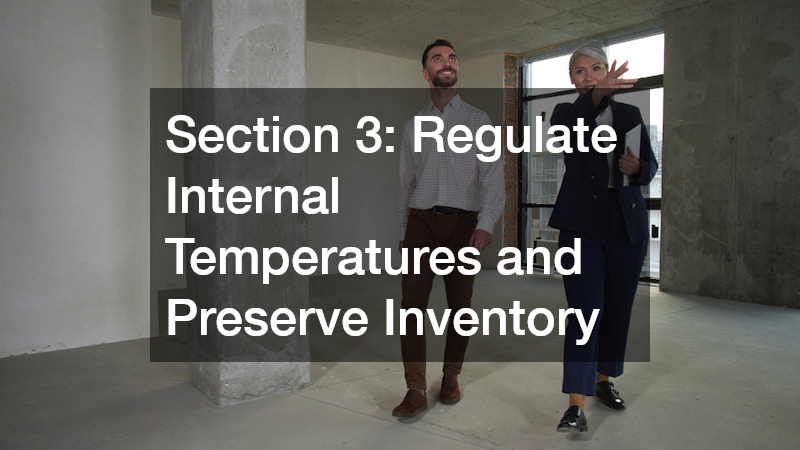
Moving inside the facility, the air quality and temperature of your environment play a staggering role in daily operations. The correlation between optimal indoor climate control and employee cognitive function is backed by decades of research. When a workspace is too hot, employees become lethargic, and error rates increase. When it is too cold, typing speeds drop, and workers are distracted by physical discomfort. A modernized climate control system is an investment in human capital just as much as it is an upgrade to your building’s infrastructure.
Older buildings frequently rely on outdated, single-zone systems. This means a thermostat in the sunny, south-facing boardroom is dictating the temperature for the windowless IT closet on the north side of the building. This results in constant thermostat wars among staff and massive energy waste. Modernizing your system involves transitioning to Variable Refrigerant Flow (VRF) technology or smart, multi-zone setups that allow for precise, localized temperature control.
Upgrading your system also requires meticulous planning. During a new AC installation, it is imperative to ensure that the ductwork is properly sized for the upgraded equipment, that programmable or learning thermostats are strategically placed away from heat sources, and that all air handlers are fitted with high-efficiency motors.
To truly optimize your building’s climate control, follow these actionable steps:
-
Upgrade to MERV-13 Filtration: Indoor Air Quality (IAQ) is paramount for reducing airborne illnesses and seasonal allergies among staff. Upgrade your system’s filtration to MERV-13 or higher to capture fine particulates, pollen, and even some viruses, ensuring a healthier breathing environment.
-
Implement Demand-Controlled Ventilation (DCV): DCV uses carbon dioxide sensors located throughout the facility to measure human occupancy in real-time. The system automatically adjusts the intake of outside air based on how many people are in the room, drastically saving energy during periods of low occupancy.
-
Seal and Insulate Ductwork: Even the most advanced cooling unit is useless if the cold air leaks into the ceiling plenum before reaching the workspace. Have a professional inspect, seal (using mastic, not duct tape), and insulate all exposed ductwork to maximize airflow delivery.
-
Utilize Smart Thermostat Scheduling: Configure your building management system to follow a strict occupancy schedule. The system should automatically drift to energy-saving setback temperatures at night and on weekends, and begin pre-cooling the building an hour before the first employees arrive.
Implement High-Efficiency Cooling and Storage Solutions
While standard climate control focuses on human comfort, businesses operating in the food service, floral, medical, pharmaceutical, or chemical sectors have far stricter requirements. For these industries, temperature control is a matter of regulatory compliance and product viability. A fluctuation of just a few degrees can result in the loss of thousands of dollars of perishable inventory, failed health inspections, or compromised vaccines.
Preserving this inventory requires robust, high-efficiency cooling and storage solutions that are constantly monitored. Older walk-in coolers and display cases often suffer from degraded insulation, failing door gaskets, and inefficient compressors that run continuously just to maintain a baseline temperature. Upgrading these systems not only secures your inventory but also provides massive reductions in electricity usage.
Because commercial cooling units operate under immense strain 24/7, they require specialized oversight. Establishing proactive emergency service contracts with dedicated commercial refrigeration companies is a critical safeguard. These partnerships ensure priority response times during sudden equipment failures, preventing catastrophic inventory loss when a compressor dies in the middle of a hot summer night.
Consider these specific upgrades for your high-efficiency cooling needs:
-
Install Automated Temperature Logging: Manual temperature checks are prone to human error and neglect. Install digital, Wi-Fi-enabled data loggers inside all walk-ins and critical storage units. These systems record temperatures at set intervals and automatically send SMS or email alerts to management if the temperature breaches a defined threshold.
-
Replace Worn Door Seals and Strip Curtains: The simplest yet most overlooked cause of cooling loss is a degraded door gasket. Inspect seals weekly for tears or brittleness. Additionally, install heavy-duty PVC strip curtains inside walk-in doors to prevent massive cold air loss when employees are moving inventory in and out.
-
Upgrade Evaporator Fan Motors: Retrofit older cooling units with Electronically Commutated Motors (ECMs). Unlike standard motors that run at full speed constantly, ECMs are highly efficient and can adjust their speed based on the cooling demand, cutting fan energy consumption by up to 50%.
-
Implement Routine Coil Cleaning: Condenser and evaporator coils must be kept immaculately clean. Dust, grease, and debris act as an insulator, forcing the compressor to work twice as hard to remove heat. Schedule professional chemical cleanings of all coils at least twice a year.
Section 4: Revamp Internal Infrastructure and Visual Identity
Audit and Overhaul Your Building’s Wiring and Panels
Behind the walls of your facility lies the nervous system of your business: the electrical wiring. As businesses grow and evolve, they inherently demand more power. The modern office relies on an array of power-hungry devices, from complex server racks and massive multi-monitor setups to commercial-grade coffee machines and rapid EV charging stations in the parking lot. Unfortunately, many facilities are operating on outdated electrical panels and wiring designed for a bygone era of typewriters and incandescent bulbs.
Operating with an overtaxed electrical system is incredibly dangerous. Warning signs of an inadequate system include flickering lights when large appliances turn on, frequently tripped breakers, buzzing sounds from panels, or outlets that feel warm to the touch. Ignoring these signs can lead to fried electronics, massive data loss from server crashes, or devastating electrical fires.
To safely accommodate current needs and future technological scaling, a comprehensive power audit is required. This involves mapping out every circuit, calculating the continuous load, and ensuring compliance with the latest National Electrical Code (NEC) standards. It is absolutely crucial to hire licensed commercial electrical contractors for this scope of work. They possess the expertise to safely upgrade main switchgears, install higher-capacity subpanels, and balance the electrical loads across the facility to prevent catastrophic overloads.
Here are the critical steps to modernizing your electrical infrastructure:
-
Install Facility-Wide Surge Protection: Lightning strikes and grid fluctuations can send massive voltage spikes through your building, destroying sensitive computers and manufacturing equipment in an instant. Install industrial-grade Surge Protective Devices (SPDs) directly at the main electrical panel to intercept and ground these spikes before they reach your equipment.
-
Upgrade to Dedicated Circuits for Heavy Equipment: High-draw appliances like industrial copiers, server racks, and breakroom microwaves should never share a circuit with standard office outlets. Rewire the facility to provide dedicated circuits for these devices, preventing nuisance tripping and equipment damage.
-
Implement Robust Cable Management: A tangle of extension cords and power strips under desks is a severe fire and trip hazard. Upgrade your infrastructure by installing raised flooring or overhead raceways to cleanly route power and data cables directly to individual workstations.
-
Test and Upgrade Emergency Systems: Ensure that all emergency exit signs, egress lighting, and backup generators are tested under load. Replace old battery backups in emergency lights to guarantee safe evacuation paths during a sudden power outage.
Refresh Workspaces with Psychology-Backed Color Schemes
With the hidden infrastructure secured, it is time to address the visible environment. The visual identity of your facility profoundly impacts the mood, stress levels, and creativity of everyone inside. Drab, off-white walls and scuffed paint create an atmosphere of stagnation and institutional coldness. Conversely, a thoughtful, psychology-backed interior redesign can breathe fresh life into your company culture and impress visiting clients.
Color psychology in the workplace is a well-documented science. Different hues trigger different cognitive responses. For example, soft blues and greens are known to lower heart rates, reduce anxiety, and promote sustained focus, making them ideal for high-stress administrative or accounting departments. Yellows and oranges stimulate energy and creativity, perfect for collaborative brainstorming rooms or marketing departments. Neutral grays and earthy tones create a sense of grounded professionalism for client-facing lobbies and boardrooms.
Executing a large-scale painting project in an active business requires careful logistical planning. Utilizing low-VOC (Volatile Organic Compound) or zero-VOC paints is essential to maintain healthy indoor air quality and prevent the harsh chemical odors that trigger headaches and nausea among staff. To minimize operational downtime, a professional commercial painting company can effectively coordinate large-scale interior jobs, working over weekends or through the night to ensure the space is dry, clean, and ready for use by Monday morning.
Consider these actionable tips when planning your visual refresh:
-
Utilize Matte and Eggshell Finishes Strategically: Use durable, semi-gloss finishes for high-traffic areas like hallways, breakrooms, and bathrooms, as they are much easier to wipe clean. Reserve matte or eggshell finishes for office walls to reduce harsh glare from overhead lighting.
-
Incorporate Brand Colors Subtly: While it is important to reflect your brand identity, painting an entire room in your company’s vibrant primary logo color can be overwhelming. Instead, use bold brand colors strategically as accent walls or in the trim, balancing them with softer, neutral primary wall colors.
-
Maximize Natural Light Reflection: If your office struggles with natural light, choose lighter, cooler paint shades with higher Light Reflectance Values (LRV). These colors will bounce sunlight and LED light around the room, making the space feel larger and more open.
-
Add Texture and Biophilic Elements: Paint is just the foundation. Enhance the visual appeal by incorporating textured wall coverings in the lobby, or introducing biophilic design elements like living moss walls, which further boost mood and improve indoor air quality.
Section 5: Secure Entryways and Enhance Ergonomics
Fix Drafty or Jammed Entrances to Prevent Energy Loss
The main entrances of your facility serve a dual purpose: they are the security checkpoints safeguarding your assets and the thermal barriers protecting your indoor climate. Because these doors are used hundreds or thousands of times a day, they suffer from intense mechanical wear. Misaligned hinges, worn out automatic closers, and degraded weather seals turn your entryways into the biggest culprits for HVAC energy waste in the entire building.
A door that fails to latch properly compromises the security of the entire facility, inviting unauthorized access or theft. A door that drags or is difficult to open creates an immediate barrier to accessibility, potentially violating ADA regulations and alienating clients or employees with mobility challenges.
Addressing these issues promptly is vital. Timely commercial door repairs are necessary to re-align sagging frames, replace hydraulic closers that slam dangerously, and install heavy-duty sweeps and weatherstripping. Keeping these barriers tightly sealed ensures that the money you spent upgrading your HVAC system doesn’t literally blow out the front door.
Take the following steps to optimize your facility’s entryways:
-
Upgrade to Touchless and Automated Openers: In a post-pandemic world, reducing shared touchpoints is a major priority. Upgrade manual doors with motion-sensor or wave-to-open automated systems. This not only improves hygiene but guarantees smooth, ADA-compliant access for all visitors.
-
Install Vestibules for Climate Control: If space permits, creating an enclosed vestibule (a double-door entry system) acts as an airlock. This prevents massive gusts of unconditioned outside air from rushing directly into the lobby every time a person enters the building.
-
Enhance Access Control Systems: Move away from traditional physical keys, which can be easily copied or lost. Implement keycard, fob, or biometric access control systems on all exterior and sensitive interior doors. This allows management to easily track entry logs and instantly revoke access for former employees.
-
Maintain and Lubricate Hardware: Establish a quarterly maintenance schedule to tighten hinges, lubricate lock cylinders with graphite powder, and adjust the tension on automatic closers to account for changing seasonal wind pressures.
Invest in Ergonomic Seating and Collaborative Workstations
The final step in a top-to-bottom facility upgrade is addressing the immediate physical spaces where your employees spend the majority of their day: their desks. You can have the most structurally sound, energy-efficient building in the world, but if your staff is sitting in unsupportive chairs at poorly designed workstations, productivity will inevitably plummet.
Poor ergonomics lead to a host of musculoskeletal disorders, resulting in increased absenteeism, higher workers’ compensation claims, and pervasive daily discomfort that destroys morale. Investing in human-centric workstation design is an investment in the long-term health and efficiency of your workforce. The goal is to create an agile environment that supports different modes of working—from deep, focused, individual tasks to dynamic group collaboration.
Sourcing high-quality, durable office furniture that withstands the rigors of a commercial environment is very different from buying a desk for a home office. Consulting with a dedicated commercial furniture company allows you to leverage their expertise in spatial planning. They can provide detailed 3D CAD layouts to maximize your square footage, ensure fire-code compliant walkways, and secure bulk pricing on commercial-grade, ergonomically certified equipment.
Implement these ergonomic and layout strategies to transform your interior workspace:
-
Standardize Sit-Stand Desks: Prolonged sitting is incredibly detrimental to physical health. Equip all workstations with electric, height-adjustable sit-stand desks. This allows employees to easily change their posture throughout the day, improving circulation and reducing lower back strain.
-
Prioritize Lumbar-Supporting Seating: Never cut corners on office chairs. Provide seating that offers highly adjustable armrests, seat depth, tilt tension, and robust lumbar support. A chair must be able to adapt to the diverse physical dimensions of different employees.
-
Incorporate Monitor Arms and Keyboard Trays: Prevent neck and eye strain by providing articulating monitor arms, allowing staff to set their screens at the exact ergonomic eye level. Adjustable keyboard trays help maintain neutral wrist postures to prevent carpal tunnel syndrome.
-
Designate Collaborative and Quiet Zones: Open-plan offices can often become loud and distracting. Balance the floor plan by creating casual, comfortable seating areas for informal collaborative meetings, while also building sound-dampened “phone booth” pods where employees can retreat for high-focus work or private calls.
Conclusion
Transforming your business facility from a deteriorating liability into a high-performance asset requires vision, strategic planning, and a commitment to proactive maintenance. By evaluating your property from the roof down to the workstation, you address the fundamental pillars of a successful operation: structural integrity, energy efficiency, aesthetic appeal, and human comfort.
The compounding benefits of this top-to-bottom approach are undeniable. Fortifying your exterior envelope and transitioning to modern utilities drastically reduces your monthly overhead and carbon footprint. Optimizing your logistics areas and interior climate protects your inventory and streamlines workflows. Most importantly, creating a visually appealing, ergonomically sound environment directly boosts the morale, health, and productivity of the people who drive your business forward.
Remember that facility management is not a one-and-done event; it is an ongoing process of assessment and refinement. You do not need to tackle every project at once. Walk your facility this week, identify the top two most urgent areas highlighted in this guide that are costing you money or causing friction, set a realistic budget, and begin reaching out to local professionals to start your building’s transformation.