Most business owners think of compliance as a paperwork problem: licenses, permits, employee handbooks, and tax filings. But the physical building where your employees work every day can quietly create legal and financial exposure that has nothing to do with paperwork at all. Cracked flooring, outdated electrical systems, poor ventilation, and neglected roofing can all trigger violations under workplace safety laws, accessibility requirements, and local building codes. Understanding how your facility itself contributes to compliance risk is the first step toward protecting your employees, your reputation, and your bottom line.
Aging Electrical Systems and Fire Code Violations
Electrical systems that were adequate decades ago often cannot support the technology and equipment load of a modern workplace. Overloaded circuits, outdated wiring, and missing ground fault protection are common violations inspectors flag during routine fire and safety reviews. These issues rarely announce themselves until a tripped breaker, a burning smell, or worse, a fire, forces the issue into the open.
Employers are often unaware that fire code requirements evolve over time, meaning a building that passed inspection years ago may no longer meet current standards. Regular electrical audits can catch problems before they become citations or safety incidents.
- Exposed or frayed wiring in storage or production areas
- Overloaded power strips used as permanent wiring solutions
- Missing or non-functional emergency lighting during power loss
- Electrical panels blocked by inventory or equipment, violating clearance rules
Flooring Hazards and Workplace Injury Liability
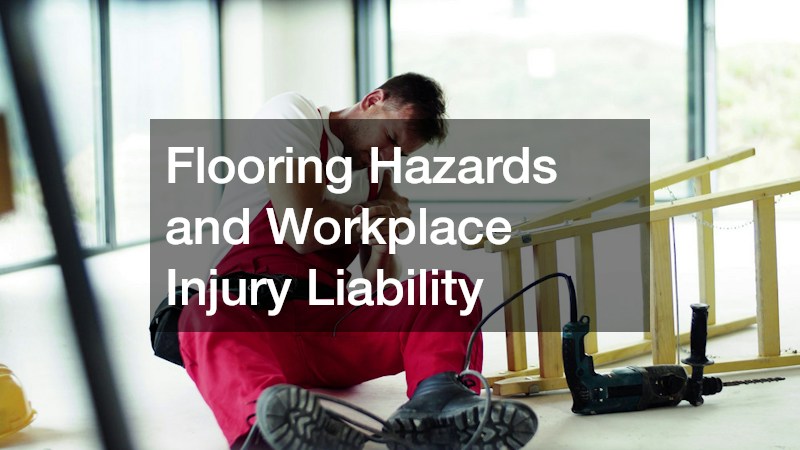
Uneven flooring, worn carpet seams, and poorly maintained warehouse surfaces are among the leading causes of slip and fall claims in commercial settings. These hazards often develop slowly, so employers may not notice the gradual shift from a minor cosmetic issue to a genuine safety threat. A curled rug edge, a slowly sinking tile, or a drainage mat that has started to buckle can all go unnoticed for months before someone gets hurt. Regulatory bodies hold employers responsible for maintaining safe walking surfaces, and a single uninspected crack can result in a costly claim. OSHA’s walking-working surfaces standard requires that floors be kept clean, dry, and free of protruding hazards, and inspectors look for evidence of routine upkeep rather than one-time fixes. When that documentation doesn’t exist, employers often have little defense beyond the condition of the floor at the moment of the incident. The financial exposure extends well beyond the immediate injury. Slip and fall claims can trigger workers’ compensation costs, general liability lawsuits, and increased insurance premiums that persist for years after a single incident. Industries with heavy foot traffic, moisture exposure, or warehouse pallet movement face particularly elevated risk, since spills, condensation, and debris accumulate faster than routine cleaning schedules can address. A practical safeguard is a documented flooring inspection schedule, covering entryways, stairwells, loading docks, and break rooms, paired with a clear process for reporting and repairing damage as soon as it’s spotted. Photographing hazards before and after repair, logging the dates of maintenance, and training employees to flag issues immediately all create a paper trail that can prove due diligence if a claim is ever filed.
Beyond safety, flooring conditions can also affect accessibility compliance, since uneven transitions or damaged surfaces may violate requirements for wheelchair and mobility device access. The ADA Standards for Accessible Design, for instance, limit changes in level along accessible routes to a quarter inch without a bevel, and anything above half an inch typically requires a ramp. A cracked tile or warped threshold that seems minor to most employees can become a legal exposure point if it blocks a customer or coworker using a mobility device. Carpet edges, mats, and transition strips are common trouble spots that often get overlooked during casual walkthroughs. Mats that curl at the corners or shift underfoot can create tripping hazards even in low-traffic areas like break rooms or reception desks. Employers should also check that transition strips are securely fastened, since loose hardware is one of the more frequent causes of slip-and-fall claims. Routine inspection schedules help employers catch wear patterns before they escalate into liability. A practical approach includes monthly visual walkthroughs, quarterly documented inspections with photos, and immediate spot-checks after spills, construction work, or severe weather that tracks in moisture. Keeping a simple log of inspection dates, findings, and repair timelines not only supports maintenance planning but also provides valuable documentation if an injury claim or compliance audit ever arises.
- Cracked or buckling concrete in loading dock areas, especially where forklifts and pallet jacks cross daily, accelerating wear and creating trip points
- Loose tiles or uneven transitions between flooring materials, which OSHA’s walking-working surfaces standard (29 CFR 1910.22) requires employers to keep free of hazards
- Wet or poorly drained areas near entrances, loading docks, or break rooms, particularly during rain or snow season when tracked-in moisture goes unaddressed
- Insufficient lighting that hides floor-level hazards, such as dim stairwells, shadowed ramps, or burned-out fixtures in storage areas
- Worn or missing anti-slip coatings in high-traffic zones like kitchens, restrooms, and warehouse aisles
- Damaged or missing floor signage (wet floor cones, caution tape) that fails to warn employees of temporary hazards
Roofing Neglect and Structural Compliance
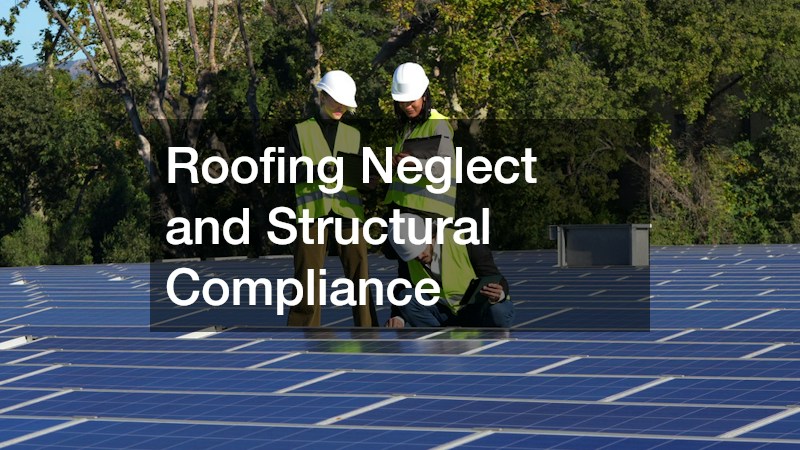
A leaking or deteriorating roof is often dismissed as a maintenance annoyance rather than a compliance issue, but water intrusion can lead to mold growth, electrical hazards, and structural weakening that violate occupational health standards. Employers sometimes delay roof repairs because the damage is not visible from inside the building, allowing problems to compound for months or years. Partnering with a commercial roofing company for scheduled inspections can help identify small leaks before they become structural failures that trigger code violations.
Roof age and material type also matter for compliance, since some jurisdictions have specific requirements for fire resistance ratings and load capacity, especially in regions with heavy snow or storm activity. Ignoring these details can leave an employer exposed during an insurance claim or safety audit.
- Ponding water that accelerates membrane deterioration
- Damaged flashing around HVAC units and vents
- Visible sagging or discoloration on interior ceilings
- Missing documentation of past roof repairs or inspections
Ventilation Systems and Indoor Air Quality Standards
Poor air circulation is one of the most overlooked compliance risks because its effects are gradual and easy to attribute to other causes, like seasonal allergies or general fatigue. Indoor air quality regulations exist to protect employees from mold spores, chemical fumes, and excessive dust, and outdated HVAC systems often fail to meet these thresholds. Employers in manufacturing, warehousing, and food service industries face particularly strict requirements due to the nature of airborne contaminants in those environments.
Regular filter changes, duct cleaning, and system inspections are simple steps that prevent larger compliance headaches down the road. When ventilation problems go unaddressed, they can also contribute to humidity issues that damage building materials and worsen the very hazards discussed elsewhere in this article.
- Inconsistent airflow between different areas of a facility
- Visible mold or mildew near vents and ductwork
- Employee complaints of headaches or respiratory irritation
- HVAC systems that have not been serviced in over a year
Temporary and Modular Structures and Their Overlooked Requirements
Many businesses rely on temporary or semi-permanent structures, such as coverall buildings, for storage, seasonal operations, or overflow space, assuming these structures carry fewer compliance obligations than permanent buildings. In reality, these structures are still subject to fire codes, structural load requirements, and accessibility rules depending on their use and occupancy. Employers sometimes discover during an audit that a structure used daily by employees was never properly permitted or inspected.
Because these buildings are often added quickly to solve a short-term need, documentation can fall through the cracks, leaving employers without proof of compliance when regulators come asking. Treating temporary structures with the same diligence as permanent ones helps close this gap.
- Missing permits for structures used beyond their original temporary purpose
- Inadequate anchoring or wind load ratings for the region
- Lack of proper emergency exits or signage
- No documented inspection history for electrical or fire safety
Proactive Facility Assessments as a Compliance Strategy
The common thread across electrical systems, flooring, roofing, ventilation, and temporary structures is that small issues become expensive problems when left unaddressed. A proactive facility assessment, conducted on a regular schedule rather than only after a complaint or incident, allows employers to catch these risks early. Many of the most cutting edge facility management approaches now incorporate predictive maintenance tools that flag wear patterns before they become safety violations.
Building a relationship with qualified inspectors and contractors, rather than waiting for a crisis, gives employers a clearer picture of ongoing risk. Documentation from these assessments also serves as valuable evidence of good faith compliance efforts if a dispute or audit ever arises.
- Schedule facility-wide inspections at least twice a year
- Keep organized records of repairs, permits, and inspection dates
- Train facility managers to recognize early warning signs
- Budget for maintenance proactively rather than reactively
Compliance risk does not only live in employee handbooks and HR policies; it is built into the walls, floors, and roof of every workplace. Taking the physical condition of your facility seriously is one of the most practical steps you can take to protect your employees and your business. Start by scheduling a comprehensive facility assessment, address the highest-risk issues first, and build an ongoing maintenance plan so small problems never have the chance to become expensive violations.